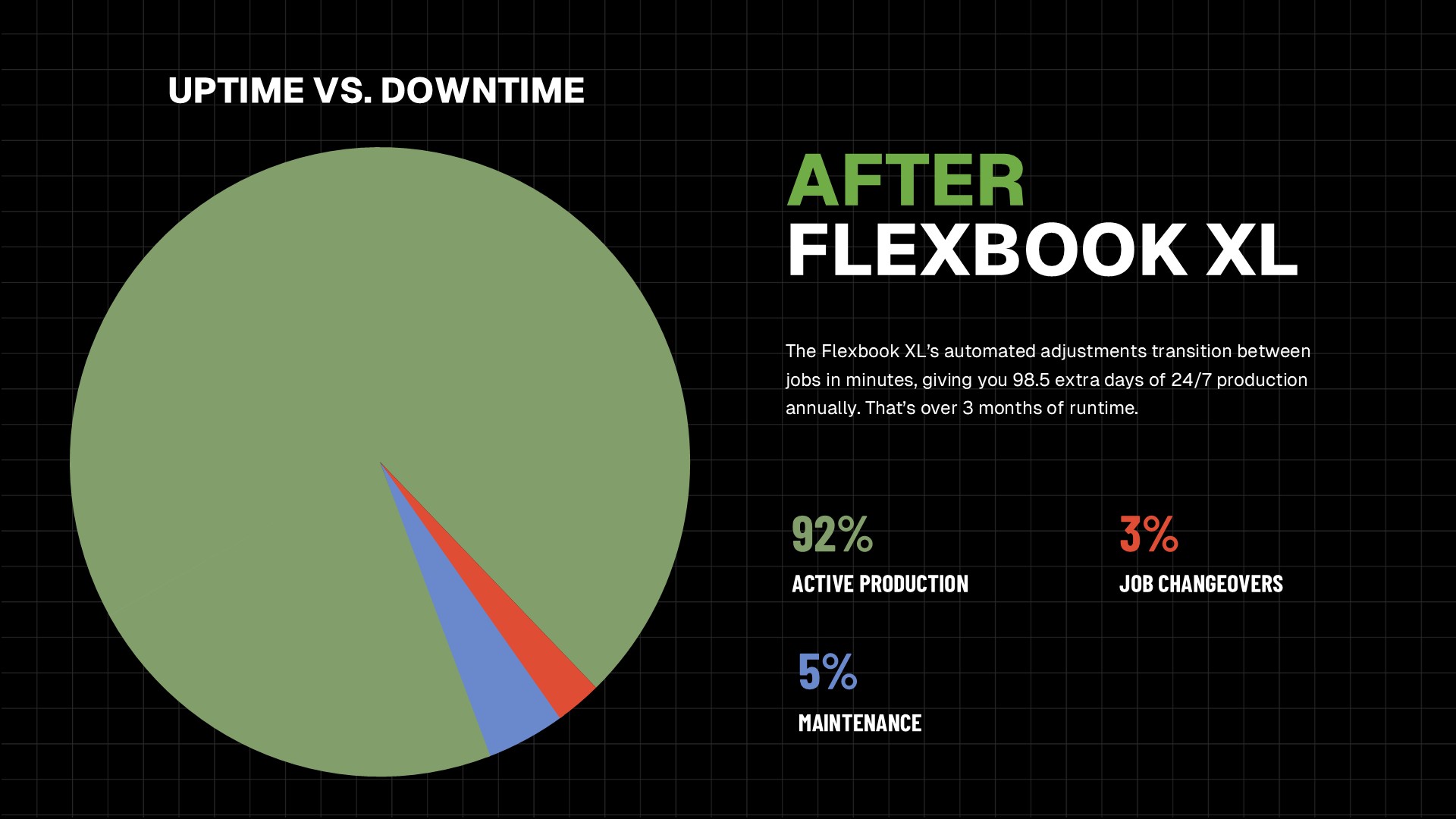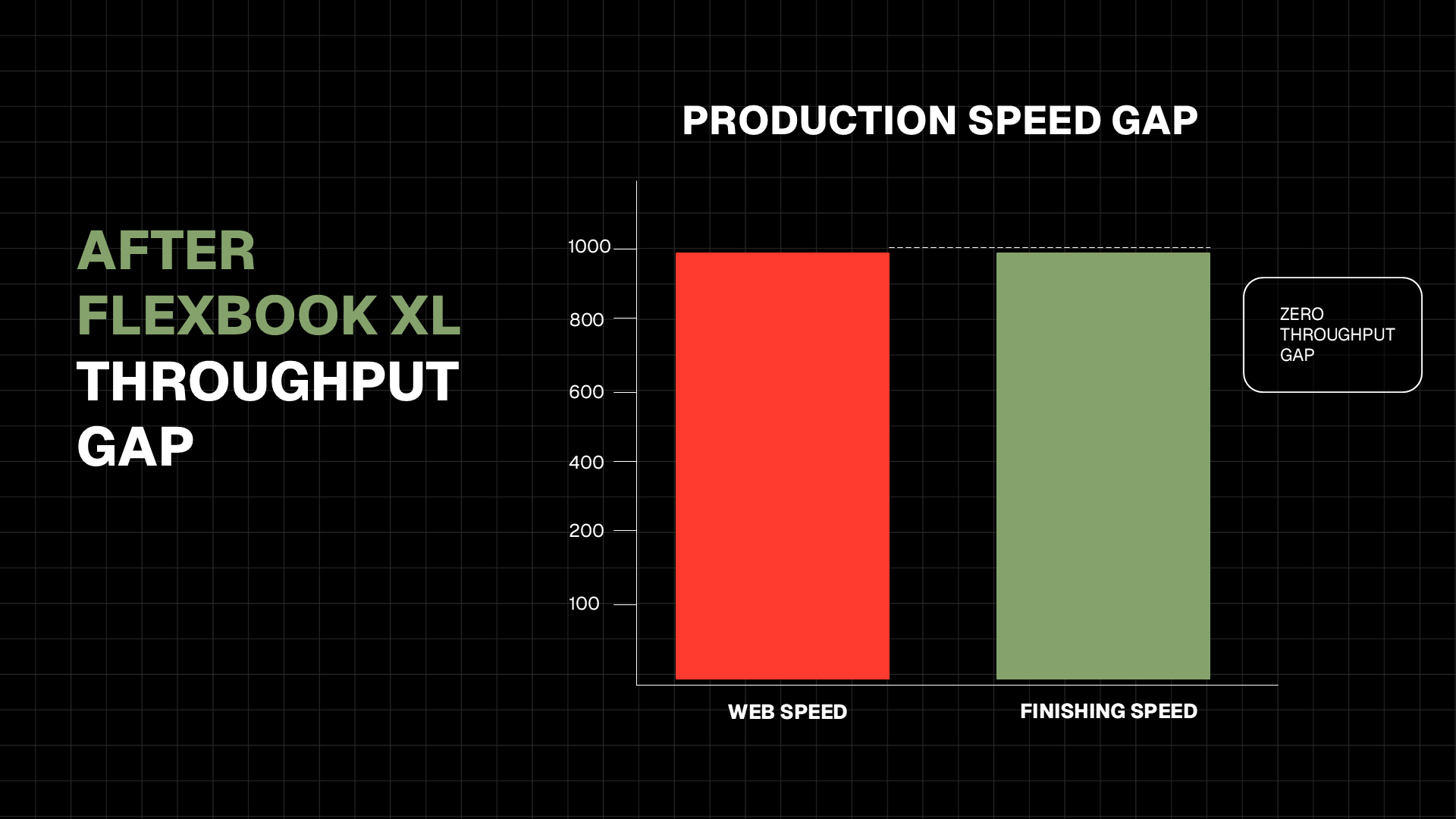



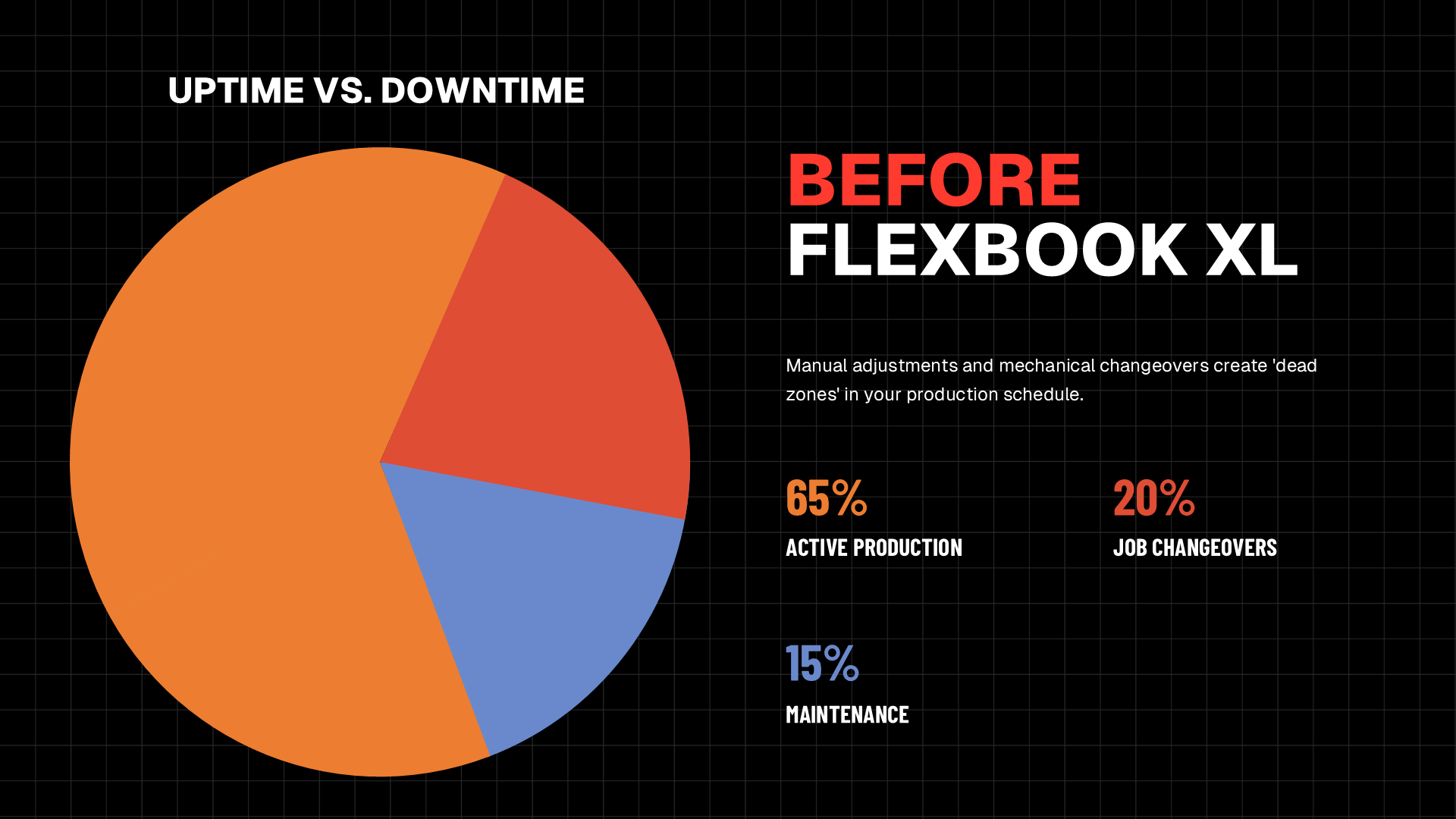
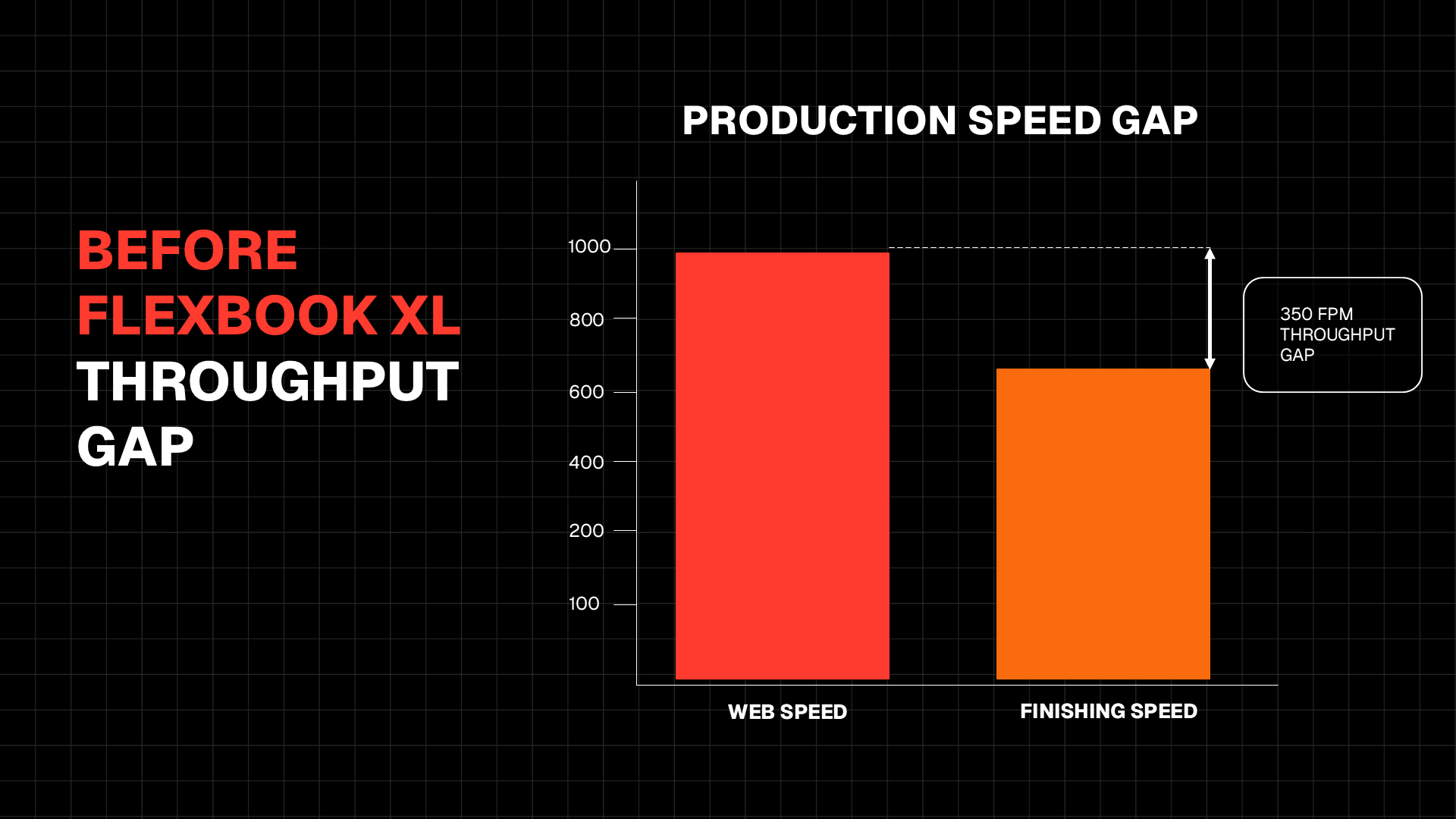
Elcograf set out to close a critical throughput gap on its book block production lines, where the speed of upstream HP T490 web presses had outpaced the capacity of downstream finishing equipment. With web speeds running at 1,000 ft/min and finishing capped at roughly 650 ft/min, the operation faced a 350 FPM throughput gap that bottlenecked the entire line and left press capacity underutilized. Compounding the issue, manual adjustments and mechanical changeovers created "dead zones" in the production schedule—uptime sat at just 65%, with 20% of available time lost to job changeovers and another 15% to maintenance. Elcograf needed a finishing solution that could match press speed, eliminate setup delays, and run with leaner staffing to fully unlock the value of its high-speed digital press investment.
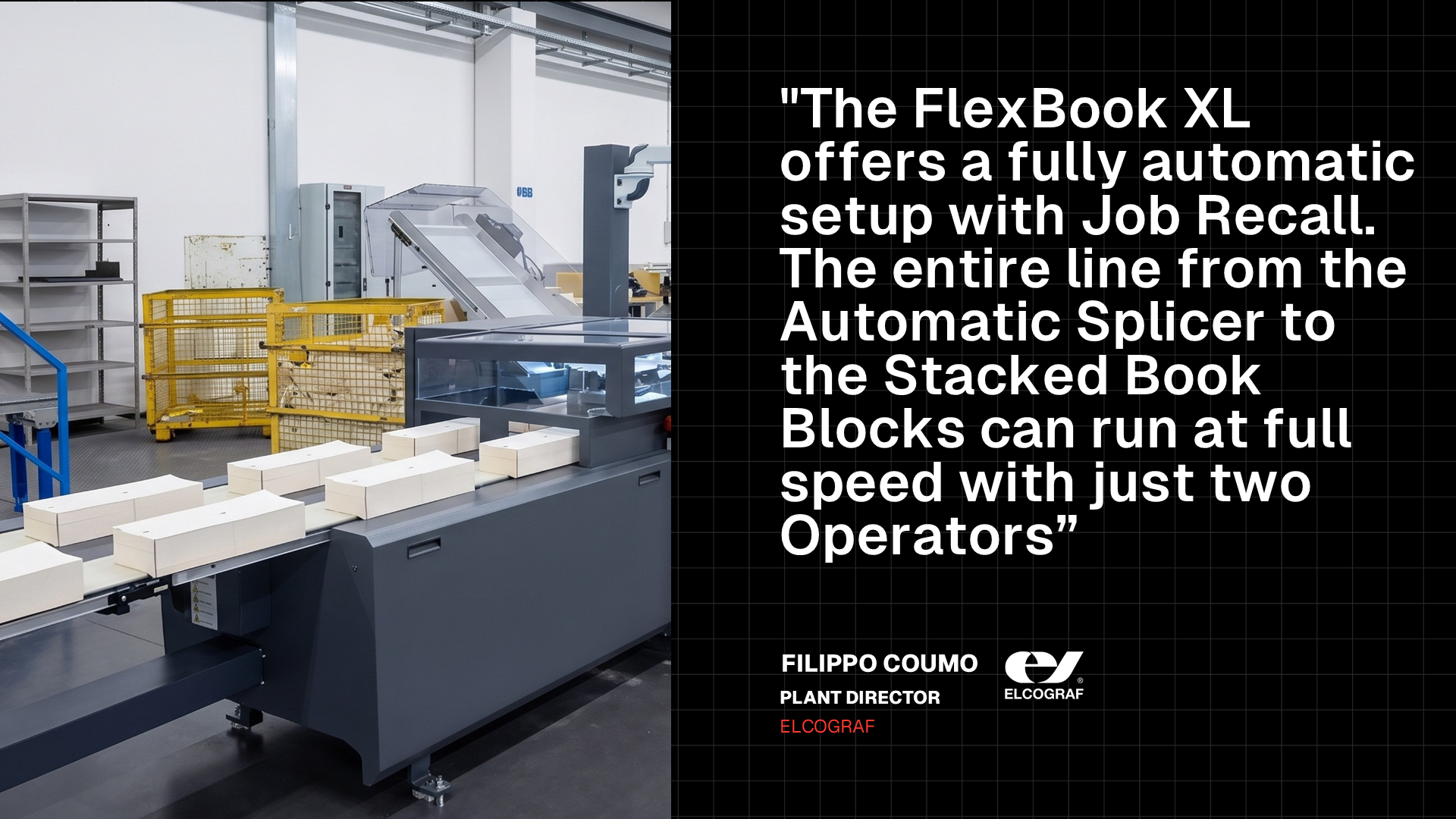
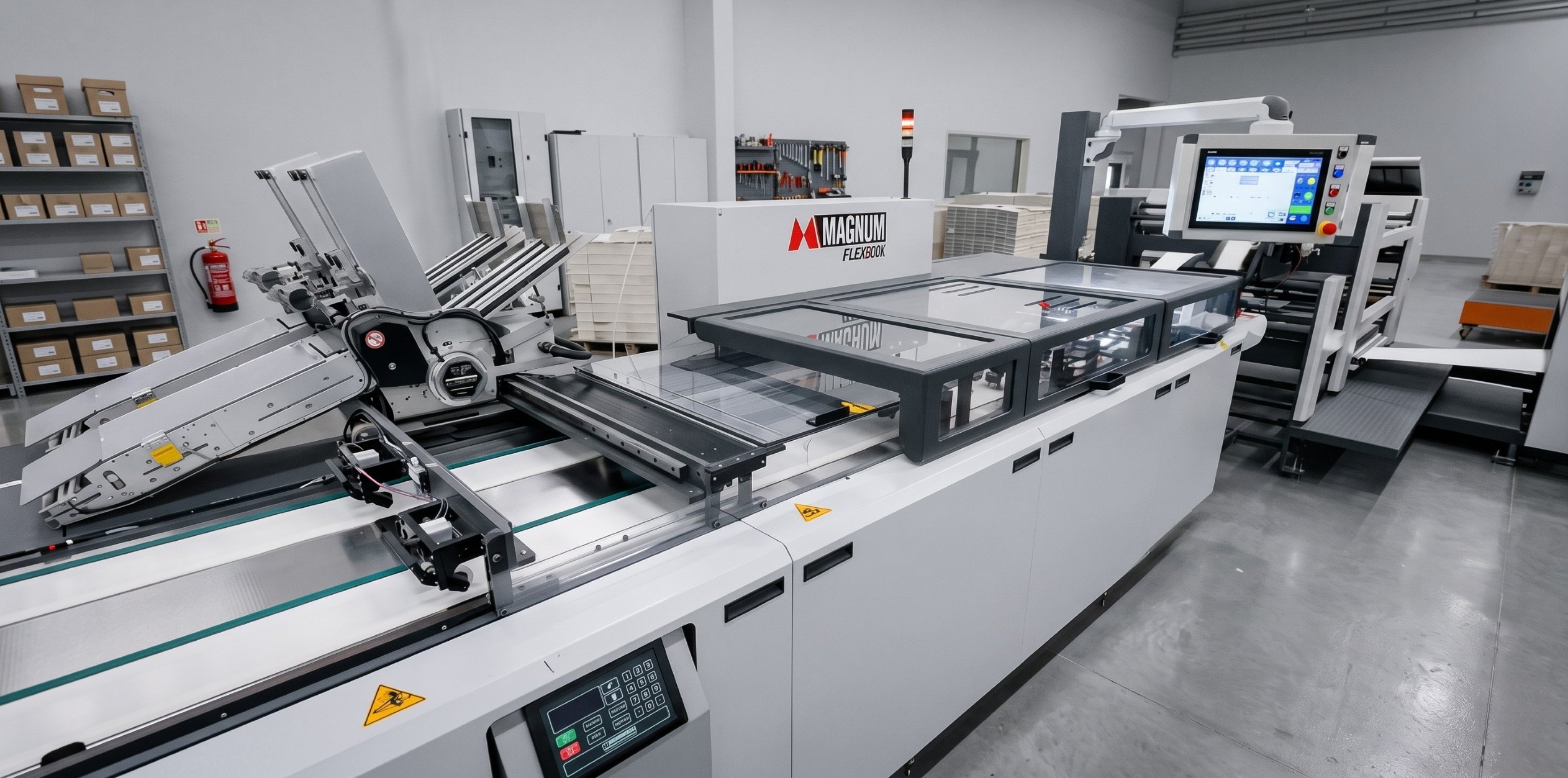
Magnum partnered with Elcograf to co-develop the Flexbook XL—a 2-up glued book block finishing system engineered specifically to align with the 1,000 ft/min (300 m/min) output of the HP T490 platform. Rather than delivering a stock solution, Magnum worked alongside Elcograf's team to design the line around their specific production realities, integrating Fully Automatic Job Recall to eliminate manual setup steps, Intelligent Waste Management and Roll Splice Detection to reduce both set-up time and material waste, and full integration with automated stacking and feeding systems to keep the line moving end-to-end. The result is a unified finishing layer that runs from the Automatic Splicer all the way to stacked book blocks at full press speed—with just two operators required to manage the entire line.
The Flexbook XL closed the throughput gap entirely, lifting finishing speed from 650 ft/min to a full 1,000 ft/min and bringing post-press output into perfect alignment with the T490 web speed. Automated job changeovers transitioned between jobs in minutes rather than hours, lifting active production time from 65% to 92%—an uplift that translates to roughly 98.5 additional days of 24/7 production annually, or more than three months of recovered runtime. Operator requirements were cut to just two at full speed, reducing labor pressure while improving consistency, and integrated waste management trimmed both setup waste and unplanned stoppages.